The Glenelg
A river that's stayed wild.
Four hundred kilometres from the Grampians to the Southern Ocean. The most spectacular stretch of it is ours to share.
River notes
One river, a thousand quiet moments.
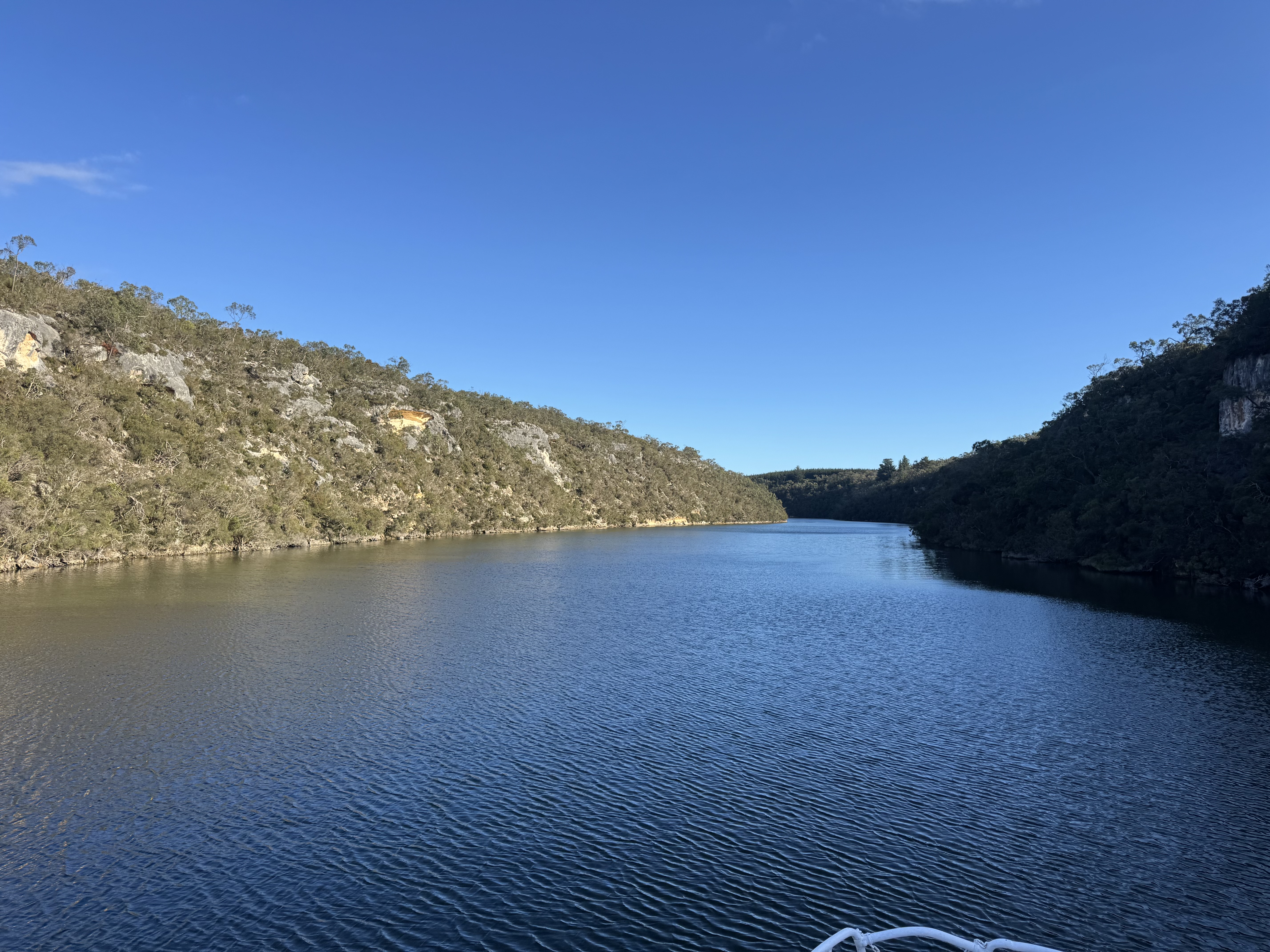
The Glenelg rises in the Grampians and finds the Southern Ocean 400 kilometres later at Discovery Bay. We've been working the bottom 30 kilometres of it since 1974 — the slowest, oldest, most-decorated stretch.
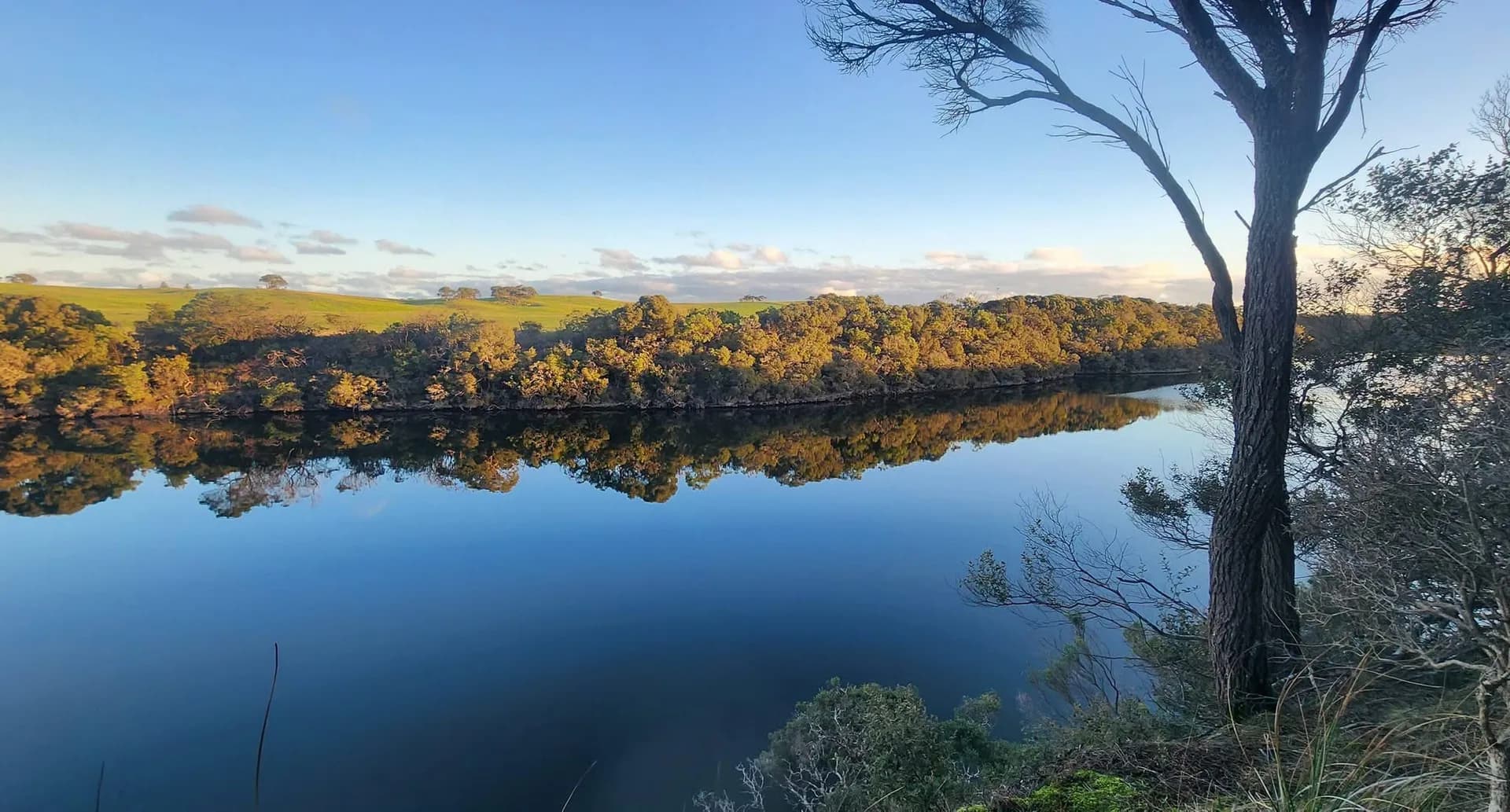
On most days the river runs glass-flat. Sea eagles patrol the gorge. Old boatsheds list quietly into the bank. And the river runs deep enough, in places, that you can't see the bottom — even from the rail of a flat-bottomed cruiser.
50-metre limestone gorges
Carved over thousands of years through soft Oligocene limestone — Australia's most spectacular freshwater gorge system.
Lower Glenelg National Park
27,300 hectares of protected forest, heath and river — and one of Victoria's wildest, least-trafficked parks.
Abundant birdlife
White-bellied sea eagles, azure kingfishers, herons, swans, cormorants. Bring binoculars.
Crosses two states
The Glenelg briefly crosses into South Australia, marking one of the few rivers that crosses an Australian state border.
The same river, two seasons
Winter and summer — drag to compare.
The Glenelg is a different river in July to the one it is in February. Pull the slider to see the same bend across the year.

Field guide
The wild things on the river.
From pelican rafts at the wider water to kangaroos drinking at the bank — a guide to who's about, where to look and how to spot them.
Bring binoculars
7×42 or 8×42 is the sweet spot for boat use — light enough to hold steady, bright enough at dusk.
Lens choice
200mm minimum for bird photography. Anything wider for landscapes — the gorge is the subject.
Magic hours
First and last cruise of the day are the best for wildlife. The 11 am cruise lands you mid-river at peak bird activity.
Where to scan
Old river gums, cliff ledges, reed margins. The skipper will point out anything that moves — but ask if you spot something.

Australian Pelican
Pelecanus conspicillatus
The defining bird of the lower Glenelg — one of the largest flying birds in the world and a constant presence on the river. Pelicans drift in small rafts along the wider stretches, scoop fish straight off the surface with their distinctive throat pouches, and stand sentry on the pilings near the mouth.
- Where
- Wider reaches and the estuary — often perched on jetty pilings or rafted in small groups
- When
- Year-round
Did you know?
An Australian Pelican's bill can hold up to 13 litres of water — three times more than its stomach. They drain the water out the sides of the pouch before swallowing the fish.

Azure Kingfisher
Ceyx azureus
A jewel of a bird — electric cobalt back, rust-orange chest — that hovers and plunges for tiny fish. Easier to hear than see: a sharp, descending whistle.
- Where
- Low overhanging branches near quiet bends
- When
- Spring & summer
Did you know?
An azure kingfisher's eyes have built-in polarising filters that cancel surface glare so it can spot fish below the waterline.

White-bellied Sea Eagle
Haliaeetus leucogaster
Australia's second-largest raptor, with a 2-metre wingspan and a piercing call that echoes through the gorge. A pair holds territory along this stretch of the Glenelg — patient watchers may catch one lifting a fish straight off the surface.
- Where
- Soaring above the gorge cliffs or perched in dead river gums
- When
- Year-round · breeding Jul–Dec
Did you know?
Sea eagles mate for life and reuse the same enormous stick nest year after year — some on this stretch of river are over 30 years old.

Eastern Grey Kangaroo
Macropus giganteus
Mobs of eastern greys come down to drink and graze along the gentler banks. Joeys are often visible in their mothers' pouches between September and March.
- Where
- Grassy clearings on the banks around Donovan's Landing
- When
- Year-round · most active dawn & dusk
Did you know?
Eastern greys can leap 9 metres in a single bound and reach 60 km/h over short distances — fastest land animal in Victoria.

Great Cormorant
Phalacrocorax carbo
The classic river bird — black, prehistoric-looking, and almost always present in numbers. Cormorants dive and chase fish underwater, often staying down for 30+ seconds.
- Where
- Dead snags and old jetties — wings spread to dry
- When
- Year-round
Did you know?
Unlike most water birds, cormorants don't have fully waterproof feathers — which is why they're always sitting with wings spread to dry out.

Koala
Phascolarctos cinereus
The river-gum forest along the lower Glenelg supports one of the last wild koala populations in south-west Victoria. Sharp-eyed passengers spot them tucked into the canopy of the manna gums and river red gums that line the gorge.
- Where
- High in the river-gum branches along the bank — often a grey ball wedged in a fork
- When
- Year-round · most visible in cooler months
Did you know?
Koalas sleep up to 20 hours a day — when you spot one, it's almost certainly napping. Their preferred eucalypt leaves are so low in energy that sleep is non-negotiable.

Purple Swamphen
Porphyrio porphyrio
Stunning indigo birds with red beaks and oversized feet that let them walk on lily pads. Often heard before they're seen — loud, complaining calls from the reeds.
- Where
- Reed beds and shallow margins
- When
- Year-round
Did you know?
Swamphens have a peculiar trick of holding food in one foot and eating it like a child holds a sandwich — they're one of the few birds that can.

Black Swan
Cygnus atratus
Victoria's emblem bird and one of the most graceful presences on the river. Pairs are monogamous; cygnets ride on the parents' backs for warmth in their first weeks.
- Where
- Wider, slower stretches and the river mouth
- When
- Year-round · cygnets Aug–Nov
Did you know?
Black swans were thought impossible by Europeans — 'as rare as a black swan' was once a phrase meaning 'impossible' — until they were sighted here in Australia in 1697.

Eastern Long-necked Turtle
Chelodina longicollis
A small freshwater turtle with a neck nearly as long as its shell — pulled sideways into the shell rather than retracted backwards.
- Where
- Logs and rocks at the waterline on warm afternoons
- When
- Late spring & summer
Did you know?
When threatened, long-necked turtles release a foul-smelling musk from glands near the legs — they're sometimes called 'stinkers' for good reason.

Mulloway
Argyrosomus japonicus
The Glenelg's premier estuary fish — silver giants that grow over a metre long. They use specialised muscles to vibrate their swim bladders and produce a deep, audible drumming sound.
- Where
- Below the surface — listen at night for their drumming call
- When
- Autumn & winter
Did you know?
Old river hands listened for mulloway through the timber hull of a wooden boat — the drumming carries clearly when the river is still.