Most people who end up on the lower Glenelg arrive a little by accident. They've come for the Great Ocean Road, or for Mount Gambier, and somebody at the pub has pointed them west to Nelson. What they find when they get here surprises them — and that's the part we'd like to explain.
Where it is
Lower Glenelg National Park sits in the far western corner of Victoria, just over the South Australian border. The park protects the bottom 30 kilometres of the Glenelg River as it swings south through limestone country toward Discovery Bay and the Southern Ocean. From Mount Gambier it's about 30 minutes by car. From Melbourne or Adelaide, allow five hours either way.
The park covers 27,300 hectares — most of it forest, heath and river, with very few roads. Nelson, on the river's mouth, is the closest town and the obvious base. The next bridge upstream is at Donovan's, 30 kilometres east. Between the two there's essentially nothing built — and that's the point.
What makes it unique
Three things, really.
The gorge
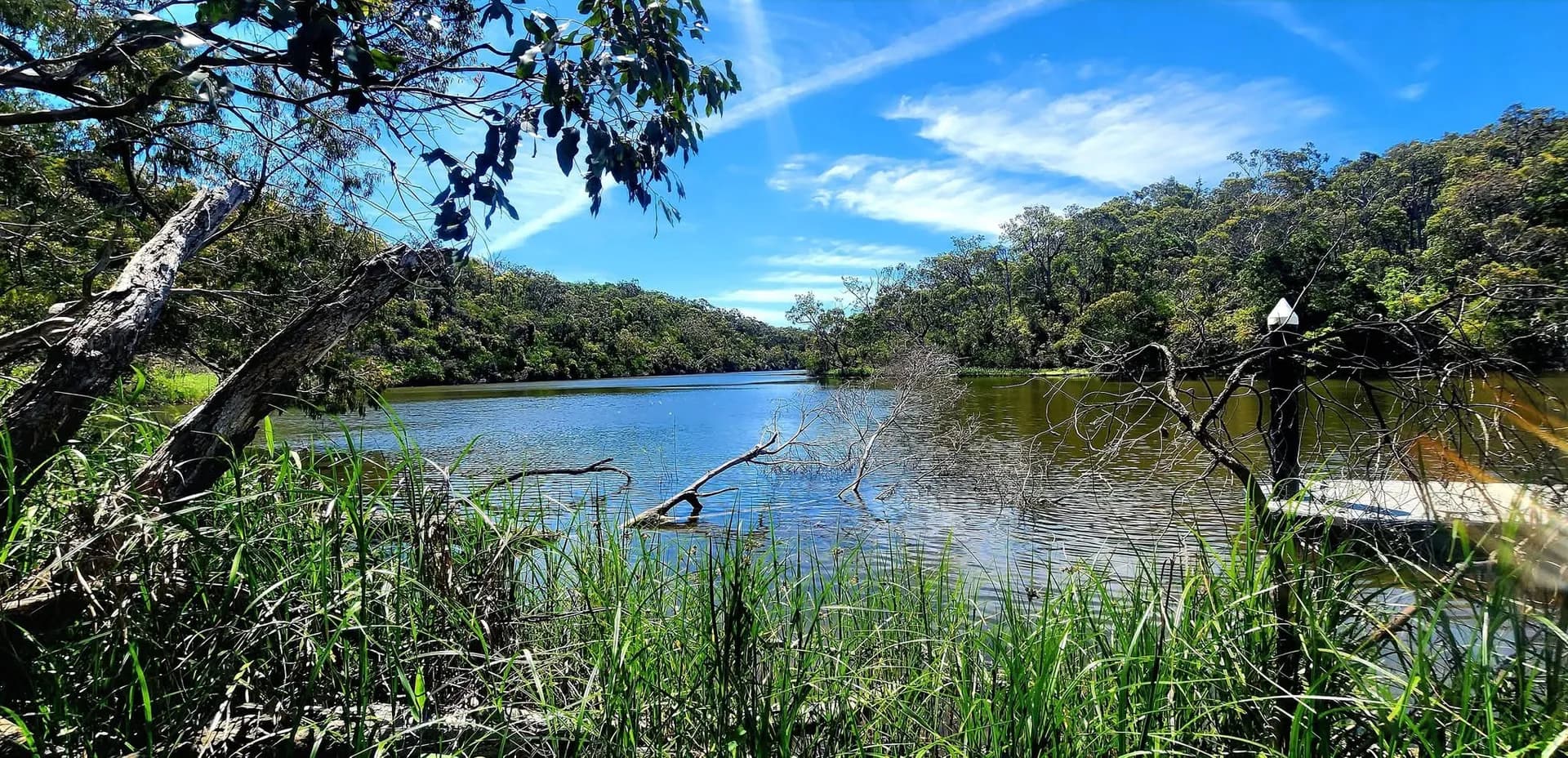
The Glenelg has spent hundreds of thousands of years cutting a 50-metre gorge through soft Oligocene limestone. It's widely accepted as Australia's most spectacular freshwater gorge — and unlike most gorge country in this country, you can float through the bottom of it on flat water. The cliffs lean in. The river goes quiet. Sound carries strangely.
The wildlife mix
The park is one of very few places in south-west Victoria where koalas, wombats, eastern grey kangaroos and serious birdlife all share a small area. You can stand at a single lookout in the morning and tick off all four — which sounds like brochure-talk until you actually do it.
The scale, and the quiet
No road follows the river through the gorge. Most of the banks have no houses on them at all. Even on the busiest summer day, you can paddle or motor for an hour and not see another person. That's rare anywhere on the Australian mainland.
Three ways to experience it
By cruise
The honest answer — and we would say this — is that the boat reaches stretches walkers and 4WDs can't. Two hours out of Nelson takes you into the gorge proper, past boatsheds older than the war and onto water deep enough that you can't see the bottom. We've been running these trips since 1974. The two-hour scenic and the longer lunch trip are the two options.
By car
A good day-trip loop links Wild Dog Bend, Pritchards and Donovan's. Sealed roads will get you close to each of them, but the best lookouts — the ones that drop you straight into the gorge — sit at the end of unsealed access tracks. Dry weather only, and a vehicle with reasonable clearance. Take water; there's no shop after you leave Nelson.
On foot
The Great South West Walk is a 250-kilometre loop out of Portland that bends through the park and follows a long stretch of the river. Walking the whole thing takes 10 to 14 days and wants planning. If you've only got a morning, the shorter day-walks from Pattersons Canoe Camp or Battersbys landing are honest little hikes that won't flatten you.
Wildlife to look out for
The defining bird of the lower Glenelg is the Australian pelican. They raft up in the wider water below the gorge, drift past the jetty in singles and pairs, and put on the kind of landings that always make children point. If you see only one species today, you'll see this one.
At dawn and dusk, eastern grey kangaroos come down to drink and graze the bank. Koalas are still hanging on in the river-gum canopy — the population is small and quiet, but our skippers know the trees where they tend to sit and they'll point them out when one's about.
Then there's the rest of the bird list: little pied cormorants and great cormorants on the snags, black swans on the wider reaches, white-faced herons standing patient in the reeds, and — on a good morning — a white-bellied sea eagle riding the updraft off a cliff. Bring binoculars. Even cheap ones change the day.
When to visit
Spring (Sep–Nov). Wildflowers through the heath, peak birdlife, and the river still cool from winter. Good light for photographs.
Summer (Dec–Feb). Warm, busy, the most cruise departures in the timetable. Bring a hat and start early — afternoons can climb into the high twenties.
Autumn (Mar–May). The locals' pick. Reliable weather, fewer crowds, water still warm enough for a swim off the bank, and the long afternoon light the gorge was built for.
Winter (Jun–Aug). Moody and quiet. Mist on the water some mornings, fewer cruise departures, and a different river entirely — flatter, darker, and worth seeing once.
What to bring
Hat. Sunscreen. A layer or two — the river runs cooler than the air, especially in the gorge. Closed-toe shoes you don't mind getting damp. A water bottle. Binoculars if you have them. A camera, or just the phone.
The Cruise Terminal carpark at 65 Old Bridge Road is newly sealed, so the walk from car to jetty is easy. The toilets there are open year-round. The Nelson Roadhouse on the main road does fuel, takeaway and basic supplies before you set out — there's no general store or café in town any more.
Leave-no-trace
Standard national park etiquette, in plain language.
Pack out what you bring in — including the apple core and the orange peel, both of which take longer to break down than you'd think. Stay on tracks; the heath is fragile and the re-vegetation work that's gone in over the last 20 years is real. Keep voices low near the cliffs — sound carries extraordinarily well in the gorge, and the wildlife is listening for you long before you see it. Dogs aren't permitted in most of the park. No fires outside the marked pits at the listed campgrounds.
The park has been quietly looked after for a long time. The easiest way to thank the rangers is to leave the place exactly as you found it.