The river cruise
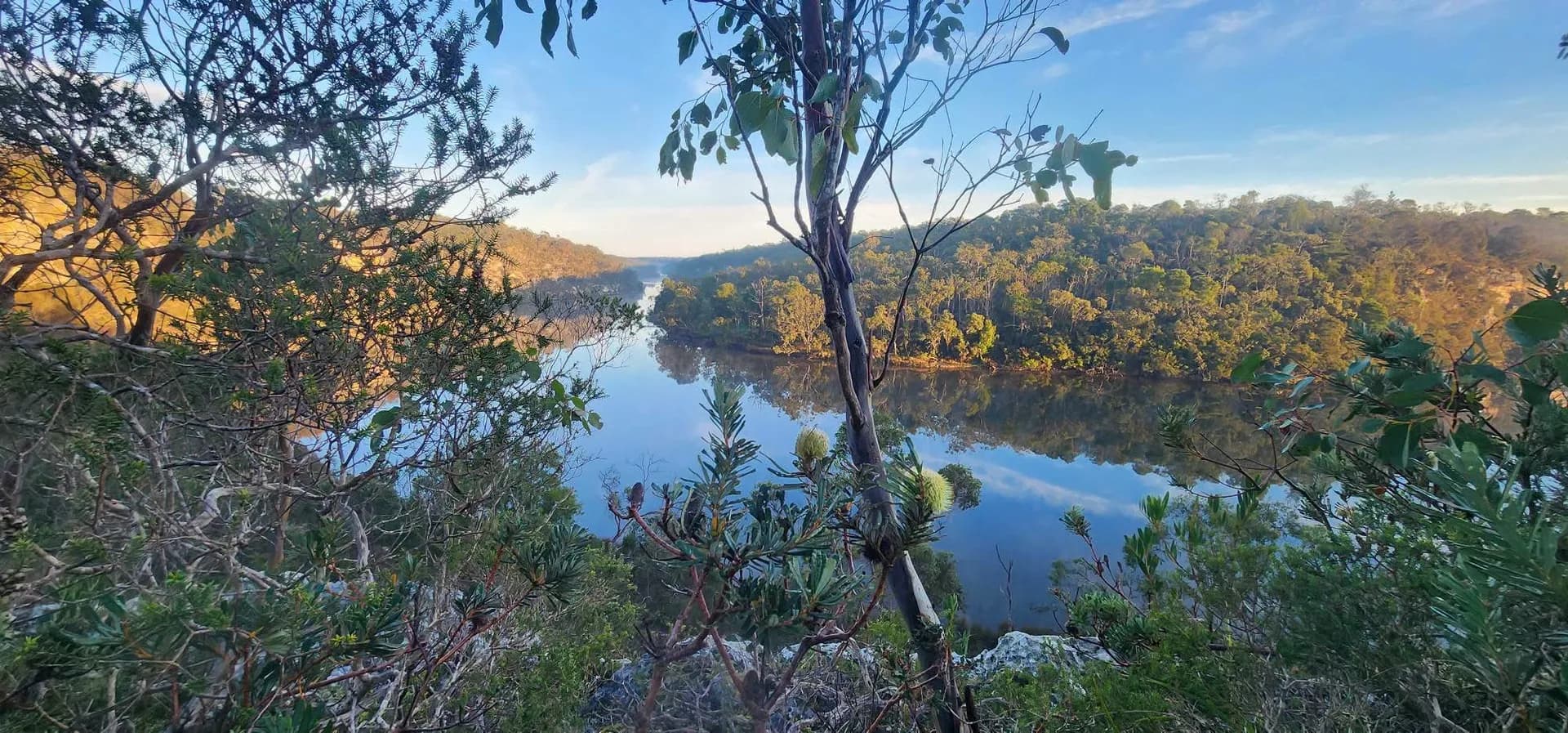
The two-hour scenic cruise up the Glenelg is the reason most first-time visitors come to Nelson. MV Mini Munya runs from the town jetty and takes you up into the gorge — soft Oligocene limestone, fifty metres high in places, where sea eagles patrol and the water runs deep enough you can't see the bottom.
You'll see pelicans — usually a lot of them. Cormorants drying their wings on snags. Kangaroos coming down to drink in the afternoons. Old boatsheds listing into the bank. The cruise is calm enough that nobody gets seasick and slow enough that you can hear what the skipper is saying without the engine drowning it out.
We've been doing this since 1974, which is a long enough run that the skippers know individual eagles by sight. Full cruise line-up here — there's also a longer lunch and dinner cruise if you want a meal on the water.
Discovery Bay beaches
West of Nelson, the Discovery Bay coast runs almost unbroken to Portland. These are big, exposed, Southern Ocean beaches — long stretches of clean sand with nobody on them, and surf that can be ferocious. They are not the kind of beach you swim at without reading the conditions first.
The Petrified Forest and the Cape Bridgewater blowholes are about an hour east. The Petrified Forest isn't actually petrified wood — it's limestone solution tubes the wind has worn back into stumps — but it's odd and worth the walk. The blowholes are best on a southerly. Seal Bay at Cape Bridgewater has a colony of long-nosed fur seals that you can watch from the clifftop walk.
Closer to town, the Nelson Beach access track will get you onto the sand for a walk. Bring a windbreak.
The Great South West Walk
The Great South West Walk is a 250-kilometre loop that starts and finishes in Portland and runs out through the Lower Glenelg National Park, along the river, down to the coast, and back through Discovery Bay. End-to-end it's about ten to twelve days. Almost nobody does it that way.
What most visitors do is pick a section and walk it as a day-walk. The stretch out of Nelson follows the south bank of the Glenelg through messmate and stringybark forest — flat, well-marked, and you can turn around whenever you feel like it. There are huts and a few river crossings further up if you want to make a weekend of it.
Parks Victoria has the up-to-date track notes. Tell someone where you're going — mobile reception in the park is patchy at best.
Fishing and canoeing the Glenelg
Estuary fishing is the local pastime — has been for generations. The Glenelg holds mulloway (the big-ticket fish, mostly worked at night), bream, mullet, and the occasional estuary perch. The jetty in town is a decent spot if you've never fished here before, but most people put a boat in and work the lower bends.
You don't need your own boat. Nelson Canoe & Kayak Hire — the longest-running canoe outfit on the Glenelg — rents canoes and kayaks from the kiosk at the bottom of Kellett Street by the half-day, the day or for multi-day trips, with drop-offs and pick-ups along the river by arrangement. The river above the town is flat and slow and very easy paddling.
A Victorian recreational fishing licence is required for anyone over eighteen. The Nelson Roadhouse sells them, or buy one online before you leave home.
The estuary at Nelson
The Glenelg estuary is the bit of water between the town and the ocean. The river bar — where the fresh meets the salt — opens and closes depending on rainfall and tides, which means the estuary is sometimes a still, brackish lake and sometimes a proper tidal channel running fast through the cut.
Whichever it is, the birdlife is the reason to walk down. Royal spoonbills working the shallows, black swans in numbers, terns, cormorants, and the pelican rafts that more or less define the place. There's a short walking track along the south bank and a longer one out toward the bar — both are flat and easy.
Donovans Landing
About twelve kilometres upstream, on the South Australian side of the border, Donovans Landing is a quiet jetty in a wide bend of the river. There's a small camping ground, a public toilet, and not much else — which is rather the point. The longer cruises pass it as a waypoint; if you're self-driving you can reach it on the gravel road in from Mount Gambier.
Where to eat
Two places, and that's the honest count. The Nelson Hotel on Kellett Street has been pouring drinks since 1855 and does pub meals in the middle of town. The Nelson Roadhouse on the main road covers fuel, takeaway, bait, ice, fishing licences and basic groceries. There's no general store or café in Nelson any more, so if you want a picnic on the river or anything particular for the kids, bring it from Mt Gambier or Portland.
Around Nelson: the locals we'd send you to
Nelson is small, and these are the people the owners point their own guests at. Three are in town; two are a short drive over the border into South Australia.
The pub · Kellett Street
Nelson Hotel
Nelson's pub since 1855 — drinks and pub meals in the middle of town, and the obvious place to eat before or after a cruise.
nelsonhotelvictoria.com.auGunditjmara culture · from Simsons Landing
Bocara Cultural Walking Tours
Walk on Country with Kerrup Jmara Gunditjmara Traditional Owner Judy McDonald — history, seasons, bush foods and the stories of this river. About two hours, 10 am Friday to Sunday; private groups by arrangement.
bocaraculturalwalkingtours.com.auCanoe & kayak hire · the kiosk, Kellett Street
Nelson Canoe & Kayak Hire
The longest-running canoe outfit on the Glenelg. Half-day paddles to multi-day trips through the gorge, with drop-offs and pick-ups along the river.
nelsoncanoehire.com.auSinkhole tours · Moorak, SA · about 45 min
Kilsby Sinkhole
A limestone sinkhole of famously clear water on a working farm south of Mt Gambier. Guided sinkhole tours and snorkelling — it's private property, so book ahead.
kilsbysinkhole.comBoandik culture · Limestone Coast, SA
Bush Adventures with Uncle Ken Jones
Boandik Elder Uncle Ken Jones leads coastal day trips, morning walks and traditional net fishing — bush tucker, native plants and fifty years of looking after this coast.
bushadventures.com.auThe day-trip approach
Most visitors arrive in Nelson as a day-trip from somewhere else. The realistic shape of that:
30 minutes east
From Mt Gambier
The easiest day-trip — most visitors are coming from here.
1 hour west
From Portland
A pleasant run along the Portland–Nelson Road through farmland and bush.
About 5 hours either side
From Adelaide or Melbourne
Usually slotted into a Great Ocean Road or Limestone Coast trip rather than a day-trip on its own.
If you're booking a cruise as part of a day-trip, the Sunday 2 pm scenic departure tends to line up best — you can have lunch at the pub before the boat, or grab something from the roadhouse on the way down to the jetty. Bring a jumper even in summer: it's cooler on the water than it feels in the carpark.