There's no bad time to be on the Glenelg. Each season just has its own character — its own light, its own quiet, its own reasons to put a coat on or take a hat. Locals tend to prefer the shoulders. Visitors usually default to summer. Here's the honest case for each.
Spring (Sep–Nov)
Spring is when the bushland along the banks comes back colour-first. Wildflowers in the heath. New growth on the river-gums. The water is still cool from winter — bring a layer for the early cruise, even on a sunny day.
For birds, this is the peak. Pelicans are pairing up, black swans are trailing strings of cygnets behind them, and azure kingfishers seem to sit on every quiet bend. Daylight is stretching out again too — by November the late-afternoon cruise is worth doing for the light alone.
One bonus that has nothing to do with the river: southern right whales are occasionally spotted off Discovery Bay's heads into late spring. Not something you'll see from the boat, but worth knowing if you're planning the whole trip.
Summer (Dec–Feb)
The warmest, longest days of the year — and the busiest. If you've got dates fixed, book ahead, especially for the Lunch and Dinner cruises. Tables go first.
Inland the gorge country can push past 30°C in February. The river is several degrees cooler than the carpark, and shade is easy to find under the cliffs and the old gums. By mid-summer, sunset on the water lands around 8:30 to 9pm — that's when the cliffs glow.
It's also snake season in the bushland — they keep to themselves, and they're not on the boat. The reason to mention them at all is so you wear closed shoes on the walk to the jetty and stay on the path.
Autumn (Mar–May)
The locals' pick, and it isn't close. Autumn brings the most reliable weather of the year on the lower river — fewer cold snaps than spring, less of the afternoon wind that builds up through summer.
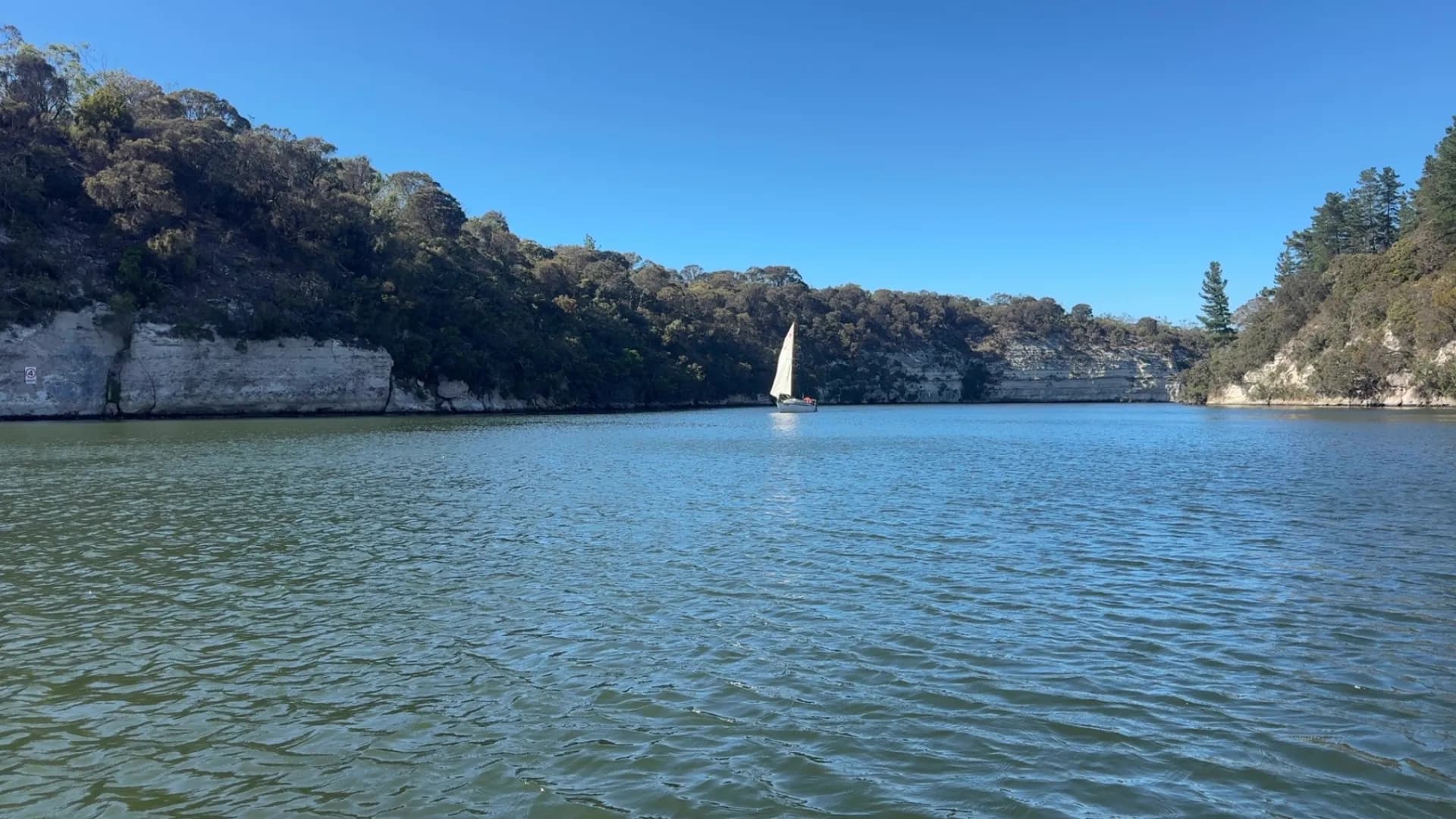
Crowds thin out after the school holidays end in early February. You can usually get the cruise you want at the time you want, even on a weekend. And the light is at its best — the sun sits lower in the sky, side-lights the gorge, and turns the limestone the colour it was meant to be photographed.
The water is still warm enough to feel mild over the rail, and the mornings haven't yet picked up the bite they'll get by June.
Winter (Jun–Aug)
Winter is the moody one. Mist sits on the still water in the early morning. Frost catches on the timber boatsheds. Sound carries further than it has any right to.
We run fewer scheduled cruises through the colder months — by arrangement May through September. Private charters are available year-round. See Plan your visit for the current schedule.
The reward for the layers is the water itself. Winter often brings the calmest river of the year — high-pressure systems sit over the south-east, the afternoon sea breeze never gets going, and the gorge runs glass-flat for days at a time. Bring proper layers, though: a wool jumper, a weatherproof shell, a beanie for the morning cruise. The river holds cold long after the sun's on the cliffs.
Daily timing — morning vs afternoon
Even within a single day, the river changes shape. Our scheduled Scenic River Cruise departs Sundays at 2pm; a private charter can pick any hour of the day. Here's how the hours differ.
Mornings on the river
Birds are still active from dawn. Light is bright, even, kind to detail, and the water tends to be at its most reflective before the wind picks up. Charter territory — the choice for photographers chasing glass-flat reflections.
Afternoons — the 2pm cruise
Warm side-lit cliffs. Longer shadows on the water. Better for photography in summer, when the overhead light at midday can flatten the gorge. Wildlife activity picks up again as the afternoon cools toward the end of the cruise.
Sunset cruises
Summer only, by arrangement. The gorge in gold for an hour, then the dusk chorus on the way home.
Tide and wind notes
The Glenelg is a freshwater river with a tidal estuary at the mouth. Above the bridge at Nelson the water is essentially flat regardless of tide — you won't feel it changing, and our cruise route stays well clear of the bar.
Wind is the bigger variable. The afternoon sea breeze tends to rise around 2 to 3pm through summer, then drops away again after sunset. It's the most common reason a cruise feels rougher than expected, though “rougher” on the Glenelg is still very gentle by ocean standards. If glass-flat water matters most, book a morning charter — the calmest hours of the day.
What to wear by season
Spring. A light jumper. A second layer for the early cruise — the breeze still has winter in it. Sun hat for the afternoon.
Summer. Hat, sunscreen, sunglasses. A light layer for the deck breeze even on a hot day — the river is several degrees cooler than the shore, and a sleeveless top can feel underdressed once the cliffs start cutting the sun.
Autumn. A lightweight jacket. Closed shoes. The kind of layering you can shed mid-cruise and add back on when the light drops.
Winter. Real layers. A wool jumper or fleece. A weatherproof shell. A beanie for the morning cruise. Gloves if your hands feel the cold — there are no warm corners on a boat at 9am in July.